Leviticus 8:14—9:24
Ministries > Thru the Bible with Dr. J. Vernon McGee
https://www.oneplace.com/ministries/thru-the-bible-with-j-vernon-mcgee/
Facebook Twitter Instagram YouTubeYou can’t fool God. In Leviticus 8, we see that liturgy and rituals are meaningless if separated from the blood of Christ. Dr. McGee stresses the importance of the consciousness and conviction of sin and shows us we can find comfort in the fact that God knows everything about us.
References
Announcer: How firm a foundation, ye saints of the Lord, is laid for your faith in his excellent word.
Steve Schwetz: When we get a glimpse of something truly godly, something so beautiful it touches our hearts, we might describe it as a little glimpse of heaven on earth. You've heard the phrase, right? Welcome to Thru the Bible, where we discover that little heaven on earth in the most unexpected place, the book of Leviticus. I'm Steve Schwetz, your host and fellow passenger on the Bible bus. You know, when most people read Leviticus, they approach it as something that, well, you just got to get through. It's kind of like driving across a dry, desolate desert on a cross-country road trip. But our teacher, Dr. J. Vernon McGee, opens up new vistas along the way. And what do you know? It's a beautiful picture of heaven. Before we dive in, though, let's visit with a fellow passenger. This one's named Gary, who shares this. I've been listening to Dr. McGee since 1987, when my newlywed wife got me listening to Christian radio. I was freshly home from being overseas in the military and struggling with my faith. We'd grown up in a local church that taught that you could lose your salvation and that I had bloody hands from being in the military. Listening to Thru the Bible, I heard and learned the word of God as never before. I got on my knees and confessed and repented to the Lord for forgiveness and rededicated my life to him as my Lord and Savior. We left that church and denomination and found a church that teaches God's word rightly. My life changed forever the day I listened to you on our local Christian radio station, and then it went off the air. When I found you on the internet and also by app, I rejoiced and have been a faithful listener since. I tell others to get the app too. Thank you for keeping me grounded in the Lord's word. Well, thank you, Gary. Thank you for your service. Thank you for listening with us and for sharing God's word with others. It's a pleasure to have you and your wife aboard the Bible bus with us. Now, we'd love to hear from you too. It only takes a minute to send us an email or drop us a note telling us how God's using our time together in his word in your life. And you can write to us through the app, also via email, [email protected] is the address, or you can give us a phone call, 1-800-65-Bible. And if you still love writing a letter, we still love receiving them. And do that by writing to box 7100, Pasadena, California, 91109. In Canada, box 25325, London, Ontario, N6C 6B1. Let's pray. Father, thank you for everyone joining us. Would you strengthen us and teach us as we open your word together? In Jesus' name we pray, amen. Here's Dr. J. Vernon McGee with our study of Leviticus 8 and 9 on Thru the Bible.
Dr. J. Vernon McGee: Now today, friends, we come back to verse 14 here of chapter 8 in Leviticus. We're talking about the consecration of the priests, and we're going to be able, when we get into the next chapter, to give you a definition of consecration, and I hope we get there today. We want to move right along. Now, at verse 14 through 30, we have the cleansing of the priests and Aaron by the blood of the offerings. I'm reading verse 14. And he brought the bullock for the sin offering, and Aaron and his sons laid their hands upon the head of the bullock for the sin offering. Now the bullock was the sin offering for the high priest, but now the four sons of Aaron claim it also. Their sins are transferred to the victim. That is understood by the laying on of the hands. And God wrote indelibly in their souls and burned it into their hearts that they were sinners, though they were in the service of God. And you will find that as you go through the Word of God, that God's men have always been conscious that they're sinners. I think that probably one of the greatest statements I ever heard was that is reported to have been made by Tholuk, the great university professor in Germany at Halle University. And this man, on his 80th birthday, and I think he'd been teaching over 50, they asked him what he was most thankful for, and he said, I'm most thankful for the consciousness and conviction of sin. I wish we had more today that were very conscious of their shortcomings and sins. God could use us if we had that. Now in Psalm 40:12, let me read. For innumerable evils have compassed me about. Mine iniquities have taken hold upon me so that I'm not able to look up. They are more than the hairs of mine head, therefore my heart faileth me. Do you feel like you're that kind of a sinner, friends? Well, he can do something for you if you are like that. After all, if you don't get sick enough to go to the doctor, you won't go to him. And if you're not sure you're a real sinner, and I mean a mean one, you're not apt to go to Christ. And then in Psalm 38:4, I read, for mine iniquities are gone over mine head as a heavy burden. They're too heavy for me. And friends, when you got a load that's too heavy for you, you try to find somebody else to carry it for you. And there is someone. He says, come unto me, all ye that labor and are heavy laden. I'll rest you, I'll take your burden. And then in Psalm 69:5, "O God, thou knowest my foolishness, and my sins are not hid from thee." You're not kidding him, and you're not fooling him, and he knows all about you. You just well tell him, don't you think? In verse 15, we're told he slew it. That is the bullock for the sin offering. Moses took the blood, put it upon the horns of the altar round about with his finger and purified the altar, poured the blood at the bottom of the altar, sanctified it to make reconciliation upon it. He took all of the fat that was upon the inwards, the caul above the liver, the two kidneys and their fat, and Moses burned it upon the altar, but the bullock and his hide, his flesh and his dung he burnt with fire without the camp as the Lord commanded Moses. Now, I read all that and read it rather hurriedly, as you see, just to let you know something of this ritual that until you see the spiritual side is absolutely meaningless. You see, they follow the ritual of the sin offering, with the exception that the blood is put on the horns of the brazen altar rather than at the golden altar, which we saw back when we considered the sin offering. You see, even the altar which is used for the bloody sacrifices must be dedicated with blood. Why? Well, that's to remind you and me, friends, there's no merit in the cross. We got a lot of folk today, and both Catholic and Protestant, for that matter, there's no distinction here, that think somehow or another, if you put up a cross at a church or put up a cross somewhere, that it has some sort of merit. They've had a great lawsuit up in Oregon, and I frankly think that they infringed on religious liberty up there when they made them take that cross down, great cross that looked over the city. Well, very candidly, I guess the unsaved doesn't like to look at it, but let's be very frank, there's no merit in a cross. After all, the merit is in the one who died on that cross. He was made sin, yet he was separate from sinners. And this little act reveals that. Now we go ahead here at verse 18, and I'm not going to read all this because we are actually going through the ritual now of the burnt offering, and we've had that before. And this can become a little boring, by the way. Now, the burnt offering followed the sin offering, and it's impossible to comprehend the beauties and merits of Christ until the sin question is dealt with in a manner that's satisfactory to God. You will notice, by the way, that this sin offering offered first, then the burnt offering. The sin offering represents what Christ did for us on the cross, then the burnt offering, who he is, and you can never really know him until you've come to him first as savior and you've accepted him as your substitute for sin, that he paid the penalty for your sin. That's very important to see. Actually, that's what fellowship means in the New Testament, means to share the things of Christ, and only those who are blood-bought believers can share the things of Christ, friends. After all, the priests had to go inside the holy place to see the beauties of that place. Outside, it wasn't very pretty, and the unbelieving world can blaspheme Christ, pass him by, but the child of God is finding new beauties and glories in him every day. Now we're told here that he brought the other ram. I'm reading verse 22, the ram of consecration now. And the ram of consecration was actually a trespass offering. No peace offerings were made. Why? Because the priests are already in the sanctuary, the place of fellowship and communion. Now, did you notice what he does here? That Moses took of the blood of it, he put it upon the tip of Aaron's right ear and upon the thumb of his right hand and upon the great toe of his right foot. And he brought Aaron's sons, and Moses put of the blood upon them the same way. Now, we have here, as we've said, this is a trespass offering. This is for the sins of the people, for these men. Now the blood-tipped ear was essential to hear the voice of God. You're not going to hear him, friends. The natural man receiveth not the things of Christ. He just doesn't want them. You have to have a blood-tipped ear. Now the blood-tipped hand was essential for service. A man says, I'm going to give to the Lord. No, you're not until you're saved. You have to have a blood-tipped hand, and then a blood-tipped foot was essential for a walk before God. And there are those say, well, I'm a good person. I live a good life. That's all I need. Oh no, friends, you'll never walk satisfactorily to God unless you have that blood-tipped foot, and that is essential. Now you find here that the same ritual is followed now with all the priests, and I'll pass by all of this. You'll notice in verses 25 through 29 that some from all the offerings were put together and placed in Aaron's and his son's hands. They then waved them before the Lord, and may I say this was total commitment to God on the basis of the value of one offering. Christ was once offered to bear the sins of many, and unto them that look for him shall he appear the second time without sin unto salvation. Now at verse 30, and Moses took of the anointing oil and of the blood which was upon the altar and sprinkled it upon Aaron, upon his garments, upon his sons, and upon his sons' garments with him, and sanctified Aaron and his garments and his sons and his sons' garments with him. And now you see the priests together with Aaron are now consecrated with blood and oil. Blood for the forgiveness of sins, the work of Christ, the oil, the anointing of the Spirit of God. Thou shalt take of the blood that is upon the altar, we were told back in Exodus 29:21, and at that time it was to be sprinkled upon Aaron. And the Lord Jesus, you remember, said, and for their sakes I sanctify myself that they also might be sanctified through the truth. That's John 17:19, his great high priestly prayer. He was set aside like this for God. Now I'm moving into this area of consecration. I think Jude had this in mind, where he says, and others save with fear, pulling them out of the fire, hating even the garment spotted by the flesh. You see, believers are to walk before the world as blood-bought children of God. Now you can run into a little service and you can put a chip on the fire, you can burn a candle and say you are a consecrated Christian, but my friend, I'd like to ask your neighbors what they think about you. I'd like to ask the folk where you go to school. I'd like to ask the people with whom you work. What do they really think about your consecration? Do they really believe that you're serving God? I heard a wonderful thing said about a Christian the other day. This man's an unsaved man. He says, now I don't know much about that fellow's religion, but if I ever get religion, I want his religion. But he says, I really think he's sort of fanatic on religion. May I say that was a tremendous compliment. The man, he thought that was fanaticism, but he said if he got religion, that's the kind he wanted. A lot of it today is not very appealing to the world outside. Now we have commandments given to Aaron and his sons in verses 31 through 36. And Moses said unto Aaron to his sons, Boil the flesh at the door of the tabernacle of the congregation, and there eat it with the bread that is in the basket of consecrations, as I commanded, saying, Aaron and his sons shall eat it, and that which remaineth of the flesh and of the bread shall ye burn with fire. Now, I told you that when we started out with that list of things that they were to have for consecration, they looked like a grocery list. Well, that's what it ended up. They had to eat what's left. And this, I think, sets before us the fact that believers are now to feed upon the finished work of Christ. Peace and satisfaction are the portion of believers only in ratio to the measure in which they feed on Christ. Nothing is to be left. All must be consumed or burnt with fire. Nothing is left to spoil or to waste, and that's important. Oh, how God's people need to feed upon him. We're told here in the last few verses, 33 through 36, that there were to be seven days of consecration and meditation. In other words, they were to remain continually on duty at the door of the tabernacle. You see, our great high priest, he ever lives to make intercession for his own. You can wake up at 2 o'clock in the morning, he's right up there for you, friends. And you may be way out yonder somewhere in a difficult, dark place, he's available. And all this was done at the commandment of God. This is emphasized as it's repeated in each of the last three verses of this chapter. I think the reason for this will be made clear now in this next chapter. Now we come to chapter 9. As Aaron and his sons begin their ministry, the glory of the Lord appears now. It's his approval, his blessing upon them. I think this chapter is intensely interesting that we're coming to, chapter 9, because it marks the initiation of Aaron and his sons into the service of the priesthood, but it gives in detail the daily ritual of the service of the priests. And with the exception of the great day of atonement, very little detail is given in the remainder of scripture relative to this daily ritual. Now, we notice something else. The priest became at this time a priest for the first time. Although he was born in Aaron's line, he was not fully a priest until consecrated. And you know what the Hebrew expression here for consecration literally is? It means filling the hand. That means you come to God with empty hands. Consecration doesn't mean that you promise to go as a missionary. Consecration means to come to the Lord and say, Lord, what will you have me to do? Come with empty hands. Let him do the filling. That's consecration. A great many people feel like you got to bring something to God if you're consecrated, and some folks seem to think they're giving the Lord a whole lot when they give themselves. Well, you're not giving him very much, friends. When he got me, all he got was just that much sin, that's all. And we have the same word, consecration, in the Septuagint, which is the Greek translation, and I think it's very close to it. The word is teleo, telos, that means end. It means the purpose, fulfilling the purpose, or it means to accomplish what God wants you to accomplish. You find that word telos and telescope, a telephone, and I think that explains some of the statements we have in the New Testament. Hebrews 2:10, it says, for it became him for whom are all things and by whom are all things, and bringing many sons unto glory to make the captain of their salvation perfect through sufferings. That is, make him complete. It was necessary for him to come down here to accomplish the will of God in order that he might bring many sons home to glory. And then in Hebrews 7:28, it says, for the law maketh men high priests which have infirmity, but the word of the oath which was since the law maketh a son who is consecrated forevermore, accomplishing the purpose, the God-given purpose. You see, therefore, we have here in this chapter the office of Jesus, not his characters in view, and that is true of the believer, actually. Now we have here the ministry of the priest in chapter 9. Aaron prepares to begin his service, first 7 verses. Aaron offers a sin offering, and Aaron offers the burnt offering, and Aaron offers the meal and peace offerings, and Aaron blesses the people, and the glory of the Lord appears. My, what a thrilling section this is. Now, we're told, I begin reading at verse 1, it came to pass on the eighth day that Moses called Aaron and his sons and the elders of Israel, and he said unto Aaron, take thee a young calf for a sin offering, a ram for a burnt offering without blemish, and offer them before the Lord. All of this is done at the commandment of God. Even the details were covered for the 7 days. Now on the 8th day, Aaron was to begin his service as high priest. The 8th day was also the first day of the week. This is the day that Jesus came back from the dead, and Jesus entered into his office as priest after his death and resurrection. Now the writer to the Hebrews says that if he was on earth, he wouldn't be a priest, that it was not until he ascended into heaven. As Aaron entered into his office as high priest on the first day, his four sons were there as witnesses. And likewise, we have four gospels which bear witness to the fact of the death and resurrection of Christ, and we today have a perfect and complete priest, and being made perfect, that is complete, he became the author of eternal salvation unto all them that obey him, and we obey him when we believe on him, and we obey him after we are believers when we attempt to do his will. That'll be consecration, friends. Consecration is when you and I come with empty hands to Christ and say to fill him. Consecration is not take a little chip and put it on the fire, take a candle and burn it and let your little light shine. You got no little light, friends. We're not lights until we're in Christ and we come with empty hands, and if he wants us to burn, then we're to burn. And if he wants us to go to Africa, then he'll send us to Africa. We need to be very careful today. These sweet little consecration services, frankly, make me sick. I've seen some of the meanest saints in the world get up and say the sweetest thing at a consecration service, and it's very emotional and very tender, but it sure is hypocritical. Oh, today that you and I belong to him as we should. Now we are told here in verse 3 and 4, and unto the children of Israel, thou shalt speak saying, take ye a kid of the goats for sin offering, calf and a lamb, both of the first year without blemish, for a burnt offering, also a bullock and a ram for peace offerings to sacrifice before the Lord, and a meal offering mingled with oil, for today the Lord will appear unto you. Now we have here then a sin offering, kid of the goats, a burnt offering, a calf and a lamb, and a peace offering, a bullock and a ram, and so on. And the Lord was to appear on that day. Now through the death of Christ to the resurrected high priest at God's right hand, that's the way to approach God today. And we have here a picture of the day when Christ shall come forth with his own, the church, to the nation Israel to institute the kingdom. What a picture you have here. But the people obey, and Moses assures them that the glory of the Lord shall appear unto them. Aaron offers a sin offering, and the ritual of the sin offering is followed in meticulous detail. The sin offering was made first. Why? Well, when the offerings were given at the first of the book of Leviticus, it was the burnt offering. The sin offerings come in last. Why? Well, there we're approaching it from God's viewpoint. Here we approach God from man's viewpoint. And my friend, you and I come as sinners, and that question has to be settled first. Then you have the burnt offering, and then you have the other offerings made here, and the ritual is followed as it's been given before. What a picture we have of him. It pleased the Lord to bruise him. He put him to grief when thou hast made his soul an offering for sin. And then Aaron offers the meal offering and the peace offerings according to the ritual. And then Aaron blesses the people, and the glory of the Lord appears. Verse 22, and Aaron lifted up his hand toward the people and blessed them and came down from offering of the sin offering and the burnt offering and the peace offering. And then we're told here, and the glory of the Lord appeared unto all the people. There came a fire out from the Lord and consumed upon the altar the burnt offering and the fat, which when all the people saw, they shouted and fell on their faces. Christ now has entered into the holy places that's not made with hands, but he's entered into that which is true heaven itself to appear there for you and me today. Oh, my friend today, lay hold of this living Christ. What a wonderful, wonderful privilege we have today. Until next time, may God richly bless you, my beloved. Well, it's a privilege to walk with the living Christ Jesus, and it's great to realize he's interceding for us. That'll be a real comfort for us next time when we study what to do when we find ourselves falling into defeat, even after spiritual victories. Let's meet here again next time to pick that up.
Announcer: Well, in the meantime, to go deeper in God's word yourself, visit ttb.org to download our ministry newsletter or call 1-800-65-Bible to receive it by mail. I'm Steve Schwetz, praying that God blesses you as you walk with him today. Sin had left a crimson stain, he washed it white as snow.
Steve Schwetz: Well, ride the Bible bus for 5 years, and you'll be amazed at what God teaches you from his word about what it means to believe on the Lord Jesus Christ, and you will be saved. It's a blessing that keeps on going. That's what we believe at Thru the Bible.
Related Episodes
Leviticus 8:1-13
Tuesday, November 24
Leviticus 6, 7
Monday, November 23
Leviticus 5
Friday, November 20
About Thru the Bible
Thru the Bible takes the listener through the entire Bible in just five years, threading back and forth between the Old and New Testaments. You can begin the study at any time. When we have concluded Revelation, we will start over again in Genesis, so if you are with us for five years you will not miss any part of the Bible.
Other Thru the Bible Programs:
Thru the Bible - Minute with McGee
Thru the Bible - Questions & Answers
Thru the Bible - Sunday Sermon
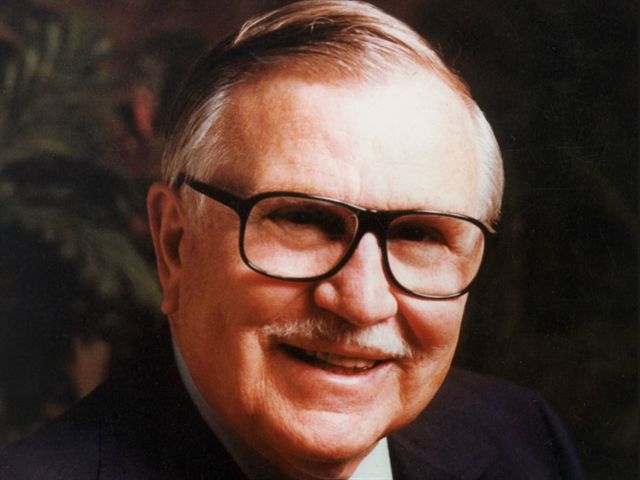
About Dr. J. Vernon McGee
John Vernon McGeewas born in Hillsboro, Texas, in 1904. Dr. McGee remarked, "When I was born and the doctor gave me the customary whack, my mother said that I let out a yell that could be heard on all four borders of Texas!" His Creator well knew that he would need a powerful voice to deliver a powerful message.
After completing his education (including a Th.M. and Th.D. from Dallas Theological Seminary), he and his wife came west, settling in Pasadena, California. Dr. McGee's greatest pastorate was at the historic Church of the Open Door in downtown Los Angeles, where he served from 1949 to 1970.
He began teaching Thru the Bible in 1967. After retiring from the pastorate, he set up radio headquarters in Pasadena, and the radio ministry expanded rapidly. Listeners never seem to tire of Dr. J. Vernon McGee's unique brand of rubber-meets-the-road teaching, or his passion for teaching the whole Word of God.
On the morning of December 1, 1988, Dr. McGee fell asleep in his chair and quietly passed into the presence of his Savior.
Contact Thru the Bible with Dr. J. Vernon McGee
Mailing Address
Thru the Bible, Inc.
P.O. Box 7100
Pasadena, CA 91109
In Canada:
Box 25325,
London, Ontario
N6C 6B1
Phone Number
(626) 795-4145 or
(800) 65-BIBLE (24253)