The God Who is Better - Part 1
Ministries > Unlimited Grace with Bryan Chapell
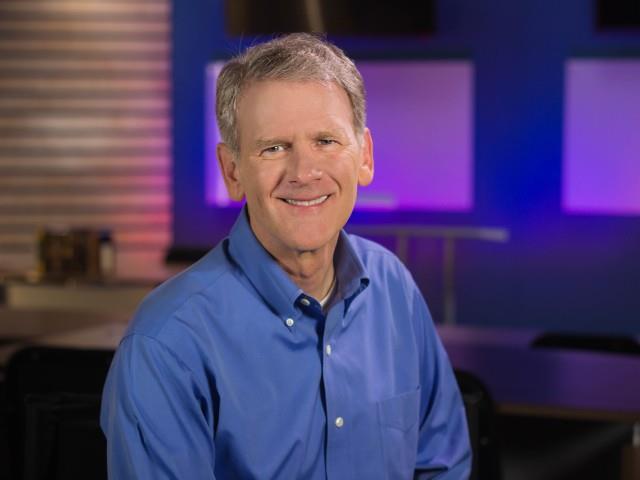
Pastor Bryan shares a lesson from Psalm 25. In this passage, the Psalmist cries out to God, asking for Him to guard and guide. Dr. Chapell reminds us that God’s answers to our prayers are better than we could ask or imagine.
Bryan Chapell: God is doing this because he is good and upright. Not because we are good and upright. Because he is good and upright, because it’s what’s in his heart, not what’s in our behavior that leads to his instruction and to his guidance. He instructs based on his goodness, not mine.
Guest (Male): So glad you joined us for today’s Unlimited Grace, the audio broadcast ministry of pastor and author Bryan Chapell. In today’s episode, Pastor Bryan shares a lesson from Psalm 25. In this passage, the psalmist cries out to God, asking for him to guard and guide. Dr. Chapell reminds us that God’s answers to our prayers are better than we could ever ask or imagine. You can find this lesson and many others when you visit UnlimitedGrace.com. And while you’re there, look for Pastor Bryan’s book, The Promises of Grace. Dr. Chapell offers a careful look at the beauty of grace and all it brings to believers. These blessings come with the understanding that because we cannot hang on to God, he hangs on to us. Let’s hear now from Dr. Bryan Chapell as he shares the lesson, "The God Who is Better."
Bryan Chapell: For me, by the time I was in fourth grade, summertime meant one thing. I can tell you in one word: baseball. I loved playing baseball. I loved it because you could be good at it even if you weren’t real big. I loved it because I could keep up with my older brothers. I loved it because I loved playing shortstop. I loved hitting the ball. I loved being able to meet my dad’s expectations, who wanted me to succeed at baseball even more than I did. I loved baseball, I loved the summertime that made it possible. I loved it until the older kids spoiled it. What did they do to spoil baseball? One word: curveball. The older kids learned to throw a curveball. In particular, when you’re young and learning to throw a curveball, you more typically throw a slider, which means it has that arc that comes toward the batter before it drops. Which meant for somebody who was in fourth grade, I inevitably started stepping out of the box when the pitch would come toward me. No amount of coaxing, coaching, threatening, or ridiculing could keep me in the box. I mean, the ball’s coming at you. What are you going to do? Your reflexes take over. You just want to step out. Even when your father says, "Just stand in there and take it in your ribs, it won’t hurt very much." Yes, it did. It really hurts. I wanted to be good again. As my batting deteriorated, so did my confidence. It began to affect my play, not just at the plate, but at shortstop. At some point, after a number of muffed plays, the coach put me, his prize infielder, into the desert of despond known as right field. For an infielder, there is nothing more embarrassing, there is no more shaming than being put in right field. I was determined to do better. I even prayed that I would do better, that I would catch the ball that would come to me. And just like all athletic wannabes who have frozen in their brain, even far into adulthood, those moments of amazing glory when we were really good... the guys are nodding, they know what I’m talking about. We have equally frozen in our brains as though it were yesterday the moments of which we are ashamed. I can remember out in right field, I can see it in my mind as clear as day. Though it was night baseball, so the lights were shining, the ball hit to me at right field. I see it coming. I actually whisper a prayer, "God help me." I take a bead on the ball. I put up my glove hand. I get ready with my other hand to cover the ball. I get ready, I see the ball coming, and I watch it sail over my head. As I turned to run and chase down the ball, I can tell you precisely, though it has been decades ago, I will tell you precisely what I yelled at the night sky: "Oh God, what did I do?" I don’t mean my failure. I mean, what did I do that you’re so mad at me that you won’t hear my prayer? Why won’t you fix this? God, what do you want out of me so that you will answer my prayer and make this go right again? It’s not just a prayer of Pee-Wee leagues, right? All of us know that prayer when disappointment or discouragement or shame has come because our career has not gone the way that we want, a relationship has not gone the way we want, or maybe you’re at that phase of life where health will never be the same again. "Oh God, what do you want of me?" In order to answer that question, you actually have to consider: what do you want of God? The psalmist is actually bold enough to ask that question in our behalf. For people whose prayers are up to God, "I lift my soul to you, God. Please help, please answer, please come to my rescue." The psalmist actually puts the prayer in our mouths: what do you want of God as you are praying this prayer? The obvious is put in front of us by the psalmist who has just asked in verse one, "Lord, I lift up my soul to you," and begins his prayer. He says what he’s praying for. Verse two: "Oh my God, in you I trust. Let me not be put to shame. Let not my enemies exult over me." God, guard me. I need your help here from the disaster that’s coming, from the difficulty. I trust you, but don’t let me be put to shame. Keep me from being ashamed and keep my enemies, whatever’s the wrong, from having a party at my expense. God, take care of me. I believe you will. I believe you’re sovereign. I believe you’re wise and powerful. I believe what your Word says, that you put a hedge of protection around me, that nothing comes into my life anymore but what is for my ultimate good and for your own glory. I believe you’re my good shepherd. Your rod and your staff, they comfort me. You say you’ll take care of me. Okay, God, do it. And we’re not just praying for God to guard us. We want God to guide us. Verse four: "Make me to know your ways, oh Lord. Teach me your paths. Lead me in your truth and teach me, for you are the God of my salvation; for you I wait all the day long." Okay, God, guide me. Tell me what you want me to do. I’ll do it. Tell me where you want me to go. I’ll follow. In these prayers to God, there is a willingness to follow, a willingness to do. "I’ll obey, I’ll go where you want me to go, just tell me." You recognize if there’s that kind of humility, it’s made complete by what’s at the end of verse five: "For you I wait all the day long." Something in us intuitively knows that we can’t exactly be saying, "God, lead me, and do it right now." That humility says, "God, I trust you to lead me, and I know that includes your timing, not mine." So guard me and show me where you want me to go, and teach me your ways, and give me patience to believe that you will work it out over your time as you intend. Where that is hard for me to do, forgive me. Guard me, guide me, but I know you’ll need to forgive me too, God. Verse six: "Remember your mercy, oh Lord, and your steadfast love, for they have been from of old." "Remember not the sins of my youth or my transgressions. According to your steadfast love, remember me for the sake of your goodness, oh God." God, remember your mercy and please forget my misdeeds. I need both of those. I know I need both. So Lord, I want you to help me. I want you to give me the results that I want. And forgive me where I’ve messed up, because I know in your Word, Psalm 66 says if I regard iniquity in my heart, if I cherish sin, if I won’t turn from rebellion, that you won’t hear me. So forgive me. The prayer in its order makes perfect sense to us. God, guard me. Now guide me. Now forgive me where I messed up. What you must understand is those prayers, as they are reaching out to a sovereign, lovely shepherd God, are actually going to be answered in ways better than we can ask. We don’t recognize that at times because we’re just praying in our humanity. We’re Pee-Wee League prayers in a world of adult contradictions, controversies, and disappointments. I think of it as I look back now. I was, of course, praying that I could hit a curveball, that I could catch a ball even in right field. God answered my prayer in a way far different than I ever knew or expected. One word: glasses. The Lord knew I needed glasses. The baseball that I couldn’t hit and my move from the privileged shortstop position signaled to my parents maybe there was some connection with the way I was playing baseball and my grades that were deteriorating in fourth grade. The consequence was I got glasses. The better consequence was I could hit a curveball. That’s all it seemed to me at the time. But as I look back now, I recognize God was doing things at a time, at a place, in a way far better than I knew to pray, even my parents knew to pray.
Guest (Male): Have you thought about the fullness of God's grace and the role that it plays in your life? You can hear and understand that you are saved by grace. But what other spiritual benefits can an understanding of grace reveal? And what has God promised to believers that his grace will provide? In the book, The Promises of Grace, Pastor Bryan offers a careful look at the beauty of grace and all it brings to you as a believer. God's Word does not promise more money and fewer headaches, but his grace provides a confidence in our relationship with him. Pastor Bryan wants to help you focus on the promises that you can expect God to fulfill: promises of assurance of God's love, peace of conscience, joy in the Holy Spirit, and perseverance in trials. You can request your copy of The Promises of Grace when you go online at UnlimitedGrace.com or by calling 844-41-GRACE. That's 844-414-7223.
Bryan Chapell: As I look back now as an adult and some of you who work with adolescents, you recognize what almost everybody does that adolescents will have to go through. Those who work a lot with adolescents say there are three things that are just characteristic of adolescent experience as you’re changing from being a child to an adult. Almost every adolescent will experience loss and loneliness and rebellion. As we are changing in life, as we are getting ready for separation from parents, as our associations, relationships, and maturity is changing, almost all of us experience some degree of loss: of being a major league baseball player, of friends that you had, of things that were once secure. There is loneliness as almost everybody with changing bodies, changing associations, change of situations, or change of schools at some point feels like an outsider. Rebellion, too. If I’m feeling like there’s loss and loneliness, then why am I going down this path that my parents or my church or my God says? The goal so often of parents is not to remove all loss and loneliness and rebellion, but to get some governor, some meter, some control on it because we actually recognize some of that loss has to be experienced, and everybody goes through some of the loneliness. If you’re just dependent on other people, that’s actually not good for you. Even the rebellion, as hard as it is in our families, we know that as parents, our great tendency when our kids reach teens is just to clamp down on them. Yet the way God has made us all is actually to clamp down on them when they’re young, to train them in the way that they should go, and as they’re getting older to slowly, slowly, slowly release, as hard as it is. The reason we know all that and try to control the process is we know from the doctors, the psychologists, and the counselors all that happens if there is too much loss. As much as you have to go through it, if there’s too much loss, then a child moves into adulthood feeling abandoned. If there is too much loneliness, then a child moves into adulthood feeling rejected and without support. If there is too much rebellion, a child moves into adulthood with lawlessness, out of control with no way to have it fixed. What was God doing as I was experiencing some loss but not too much, experiencing loneliness in right field but not too much, and willing to walk away from God if I didn’t see him fix it all? I just wanted to be able to hit a curveball. But as God was providing for me glasses at that time of life, I think he had a much greater emphasis upon my academic experience than he did upon my baseball experience. I look back at how my life developed and I recognized, although at some point in my life I hated the nerd reputation that I was earning in school, that the Lord would not only lead me into ministry, but lead into training ministers. To lead into a church that has a heart for mission far beyond this place where God is allowing what happens in this service to be heard by literally hundreds of thousands of people around the world, God was preparing me for something far more than I knew. I just wanted to hit a curveball. God was preparing someone better than he knew, not just by getting me ready for academics, but by actually building in me trust in him. He will take care of me. He can take care of me. He has a greater purpose, he has a greater plan. It’s not going to unfold all at once; it may not be apparent in your lifetime. But God is saying, "I want you to know that I can do better than you can pray. Seek me out, turn to me, and allow your trust in me to grow with understanding." I was praying for baseball, but God was preparing for ministry and for you. Why do we need that perspective? Because of the strangeness of this psalm. Everything I’ve said to you so far is familiar and orderly and makes a certain elementary sense. We ask God to guard us and to guide us and to forgive us. Okay, that’s what we ask. How does he answer? The psalmist continues to declare certain things about God in response to the prayer beginning in verse eight. The psalmist declares of the Lord, "Good and upright is the Lord; therefore he instructs sinners in the way." What does God do in response to the prayer? He forgives. He instructs sinners in the way. I know the word forgiveness is not there, but think of what word could have been in that place. He instructs saints in the way: the people who are all fixed, the people who got it straightened out, the people who got it figured out. Instead, God’s instruction is for those who are sinners. His provision, his guidance, his guarding is for those who are sinners. It’s so interesting at the end of verse eight that he says specifically that God is doing this because he is good and upright. Not because we are good and upright. Because he is good and upright, because it’s what’s in his heart, not what’s in our behavior that leads to his instruction and to his guidance. He instructs based on his goodness, not mine. By doing so, he guards me. Verses nine through twelve talk about it. He leads the humble in what is right and teaches the humble his way. All the paths of the Lord are steadfast love and faithfulness for those who keep his covenant and his testimonies. He’s guiding. He’s doing it by pointing out what I should do and actually pointing out the path. Verse ten: "All the paths of the Lord are steadfast love and faithfulness." I’m praying, "God, guide me." And what does he promise to the humble? A lot of us will know the words out of Proverbs 3: "Trust in the Lord with all your heart, and do not lean on your own understanding. But in all of your ways acknowledge him, and he will make your paths straight." As though he’s not just saying, "Go down that path." He’s actually preparing the path. It’s both sides of the Lord’s guiding care. He’s telling us where we should go, the paths we should walk, but he’s ahead of us preparing the path. That’s all part of God’s tremendous guidance and blessing. Because he is guiding in that way, he is ultimately guarding us beyond our expectations, beyond our abilities, beyond anything that we could accomplish. That is there, too. The guarding is in verses thirteen through fifteen. Speaking of the one who is following that God, we read in verse thirteen, "his soul shall abide in well-being, and his offspring shall inherit the land. The friendship of the Lord is for those who fear him, and he makes known to them his covenant." I know the words go by fast and they are archaic. They are precious and wonderful words of how God guards his people. He is guarding beyond the physical. Verse thirteen: "my soul will have well-being." I’m praying, "God, help me hit a curveball." And God is saying, "I’m going to help you have enough confidence in your academics that you’re not just do good in grade school. You’ll press on in education till finally you become part of educating other people and it is for my ministry of the gospel." I would never imagined, could not have dreamed, and in some parts of life would not even have wanted that. And yet God is saying, "your soul will be in well-being." You’re praying for a good hospital report and he’s saying, "but rest in me. I am still the good shepherd. I will lead you to still waters. I will take you in the path that you should go. I am still providing for you. That is who I am. I’m the one who is giving rest to your soul."
Guest (Male): If you've been blessed by this message and would like to hear more from Dr. Chapell, I would encourage you to visit UnlimitedGrace.com. In addition to messages from Pastor Bryan, you can explore the many sermons, podcasts, seminars, and more available to you. Also, be sure to request a copy of the book from Dr. Bryan Chapell called The Promises of Grace. We'll send you a copy right away as our way of saying thank you for your most generous financial support. Once again, go to UnlimitedGrace.com or you can give by calling 844-41-GRACE. That's 844-414-7223. Please be sure to join us next time as once again we endeavor to put Christ at the center of our efforts so that lives might be transformed by his unlimited grace. This ministry is brought to you by Unlimited Grace Media and continues to be made possible with your generous financial support.
Related Episodes
The God Who Shepherds
Wednesday, July 22
The God Who Covenants - Part 2
Tuesday, July 21
The God Who Covenants - Part 1
Monday, July 20
About Unlimited Grace
Unlimited Grace is dedicated to spreading the gospel of God’s grace to all people. We desire for believers everywhere to serve God through faith in His grace that frees from sin and fuels the joy of transformed lives.About Bryan Chapell
Bryan Chapell, Ph.D. is the Stated Clerk Pro Tempore of the Presbyterian Church in America (PCA), based in Lawrenceville, GA.
Dr. Chapell is an internationally renowned preacher, teacher, and speaker, and the author of many books, including Each for the Other, Holiness by Grace, Praying Backwards, The Gospel According to Daniel, The Hardest Sermons You’ll Ever Have to Preach, and Christ-Centered Preaching, a preaching textbook now in multiple editions and many languages that has established him as one of this generation’s foremost teachers of homiletics.
Dr. Chapell is passionate about sharing the truth of God's grace with others, because it provides the freedom and fuel for transformed lives of joy and peace.
He and his wife, Kathy, have four adult children, a growing number of grandchildren, and lives rich with friends, fishing and faith.
Contact Unlimited Grace with Bryan Chapell


